
"seed garden"
900 article(s) found

Introduction to the flavor and taste of Ecuadorian coffee farm Hassanda coffee garden Ecuadorian coffee beans
Because of the unique role of the Galapagos Islands in the course of history, the Government of Ecuador has designated the Galapagos Islands as a national park, the land is no longer allowed to be reclaimed as new agricultural land, and the introduction and use of chemical fertilizers, pesticides, herbicides and other chemicals are strictly prohibited, so coffee produced in the Galapagos Islands is recognized as a natural product. Ecuador ES Coffee South Ecuador

Introduction to the flavor characteristics of Dehong small grain coffee-the hometown of coffee in China _ Dehong Coffee Brand recommendation
Professional coffee knowledge exchange more coffee bean information Please pay attention to the coffee workshop (Wechat official account cafe_style) Dehong Coffee accounts for 20% of the national area, is the only Ruili coffee germplasm resources garden of the Ministry of Agriculture, but also has a strong coffee engineering, technology research center and other scientific research institutions. At present, 220000 mu of coffee is planted in Dehong Prefecture, driving more than 60, 000.

Boutique Coffee beans Rose Summer Coffee the latest coffee introduction unique flavor full of taste
The species of Geisha was discovered in the Rose Summer Forest of Ethiopia in 1931 and sent to the Coffee Institute in Kenya; it was introduced to Uganda and Tanzania in 1936, in Costa Rica in 1953, and Panama was introduced in the 1970s by Francesca of Dongba Seven Farm Garden. Mr. Serraxin got the seeds from CATIE in Costa Rica and started growing Rosa Coffee because

Introduction to the varieties of Rosa coffee beans produced by the method of grinding scale flavor description
The species of Geisha was discovered in the Rose Summer Forest of Ethiopia in 1931 and sent to the Coffee Institute in Kenya; it was introduced to Uganda and Tanzania in 1936, in Costa Rica in 1953, and Panama was introduced in the 1970s by Francesca of Dongba Seven Farm Garden. Mr. Serraxin got the seeds from CATIE in Costa Rica and started growing Rosa Coffee because

Enterprises create coffee with "ID card" for the "registered permanent residence" of the coffee garden.
In Lincang City, the second largest coffee growing area in Yunnan Province, a local company is "registered permanent residence" for coffee plantations by establishing a traceability system for coffee products, so that every bag of coffee has an "ID card". At that time, by scanning the QR code on the coffee package, consumers can know what kind of coffee they are consuming, the altitude of the origin, and so on, so as to realize the seamless monitoring of coffee quality.

What is the Costa Rican coffee garden? How should I drink Costa Rican coffee?
Professional coffee knowledge exchange more coffee bean information Please pay attention to the coffee workshop (Wechat official account cafe_style) Costa Rican coffee is usually very pure and sweet, but the mellow thickness tends to be elegant. In recent years, many processing plants have begun to produce coffee with a variety of tastes and styles. Coffee has been grown in Costa Rica since the early 19th century, after Costa Rica gained independence from Spain in 1821.
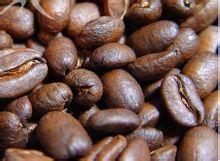
Boutique coffee beans Rosa coffee the latest coffee introduction and information unique flavor full of taste
The species of Geisha was discovered in the Rose Summer Forest of Ethiopia in 1931 and sent to the Coffee Institute in Kenya; it was introduced to Uganda and Tanzania in 1936, in Costa Rica in 1953, and Panama was introduced in the 1970s by Francesca of Dongba Seven Farm Garden. Mr. Serraxin got the seeds from CATIE in Costa Rica and started growing Rosa Coffee because

Where can I plant coffee trees in China? Can I plant potted coffee trees at home? How do you plant it?
For more information on coffee beans, please follow the coffee workshop (official Wechat account cafe_style). Coffee trees have long been planted in Yunnan, China. The earliest coffee recorded in history is the planting of China's first coffee tree in Taiwan in 1884. In the tenth year of Guang Xu of the Qing Dynasty (AD 1884), a British tea merchant found that the climate of Taiwan was very similar to that of Central and South America.

Introduction of grinding scale in taste producing area of Ecuadorian coffee with characteristic flavor description method
Ecuadorian coffee beans feature c well-known brands in South America, Ecuadorian A-grade coffee, with a large state-run seed value garden; 100% from the natural vegetation zone of 1300-2000 meters highlands, popular in Europe and the United States, and taste the exquisite world-class Arabica Arabica flavor at supermarket prices. ES Coffee is a clean organic coffee grown on the slopes of the Andes in Latin America. It's 100%.

A brief introduction to the flavor, taste and aroma characteristics of Katim's boutique coffee beans.
Catimor: in 1959, the Portuguese mixed Brazilian Kaddura and Timo to develop a disease-resistant Katim / Katimo, which is now an important variety of commercial beans. Yunnan small grain coffee is a 3-year-old 4-year-old fruiting tree. Coffee is a short-day plant. Coffee has the characteristics of multiple flowering and concentrated florescence. Small seed coffee florescence in Yunnan from February to July
Coffee planting in Zhanjiang
Coffee is a worldwide drink, known as "the king of beverages in the world".

India's oldest Darjeeling black tea estate brand Alobari Darjeeling
Darjeeling was originally conceived as a sanatorium, and the British came to Darjeeling with the aim of establishing a sanatorium for their soldiers. Dr. Campbell was the first inspector of Darjeeling, and it was he who actually promoted the growth of tea (albeit on an experimental basis) in the Darjeeling mountains in 1841. It is said that he set

Introduction of Ecuadorian Coffee Flavor and Taste Variety description of Baking degree, brewing method and Manor production area
The famous South American brand, Ecuadorian Grade A coffee, has a large state-run seed value garden; 100% is produced in the natural vegetation zone of 1300-2000 meters highland, popular in Europe and the United States, and tastes exquisite world-class Arabica Arabica flavor at supermarket prices. ES Coffee is a clean organic coffee grown on the slopes of the Andes in Latin America. It is 100% pure coffee, through efforts to change
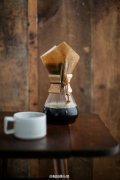
The method of making dripping coffee
The characteristics of drip coffee water drip filter pot originated in the Netherlands, is the best choice for making iced coffee. The most special thing about waterdrop coffee is that cold water is completely used in the process of coffee extraction. In general, when making, it will let the cold water deep bake at the rate of 7 drops in 10 seconds, and grind the coffee powder carefully, so that the coffee can be slowly extracted through cold water.

Floral aromas, tropical fruits, strong sweetness from the ancient native species of Ethiopia
The fragrance of flowers, tropical fruits, strong sweetness; these are the feelings that Rose Summer has always given us. Properly baked, they make you feel like sipping the fragrance of a bouquet of flowers. Maybe you don't know the story of Rose Summer, which was originally taken as a coffee sample to a coffee experimental garden in Costa Rica and distributed to several small farms.
Coffee beans recommend organic coffee from Papua New Guinea
Organic coffee (Purosa Estate M10 JAS Organic) the seeds of coffee from Papua New Guinea were introduced from Jamaica, Kenya, Tanzania and other countries more than 70 years ago in the 1930s. Formal planned cultivation since the 1950s; the main producing areas are Groca and Madha in the central mountains.
Panama Panamanian Rose Summer Coffee Panamanian Boquette boquete Rose Summer contains 30% Cupid SHB
The species of Geisha was discovered in the Rose Summer Forest of Ethiopia in 1931 and sent to the Coffee Institute in Kenya; it was introduced to Uganda and Tanzania in 1936, in Costa Rica in 1953, and Panama was introduced in the 1970s by Francesca of Dongba Seven Farm Garden. Mr. Serraxin got the seeds from CATIE in Costa Rica and started growing Rosa Coffee because
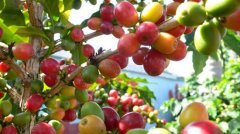
The price of Rosa coffee beans fruity coffee
The species of Geisha was discovered in the Rose Summer Forest of Ethiopia in 1931 and sent to the Coffee Institute in Kenya; it was introduced to Uganda and Tanzania in 1936, in Costa Rica in 1953, and Panama was introduced in the 1970s by Francesca of Dongba Seven Farm Garden. Mr. Serraxin got the seeds from CATIE in Costa Rica and started growing Rosa Coffee because
Rose Summer Coffee geisha Coffee Panamanian Valentine Manor washing Rose Summer Geisha
The species of Geisha was discovered in the rose forest of Ethiopia in 1931 and sent to the Coffee Research Institute in Kenya, introduced to Uganda and Tanzania in 1936, introduced to Costa Rica in 1953, and Panama was introduced by Francesca from Dongba Seven Farm Garden in the 1970s. Mr. Serraxin got the seeds from CATIE, Costa Rica, and then